

It’s a common story in e-commerce — 72% of brands watch customers walk away after the first purchase, while only 19% invest seriously in retention infrastructure.
The math is clear. A small 5% bump in retention can lead to 25-95% more profit. The problem is finding a platform that actually works without overcomplicating things or hiding features behind big price tags.
We focus on post-purchase experience platforms that help maximize customer lifetime value through smart upsells, cross-sells, and real loyalty building after checkout.
We looked closely at their engagement features, automation depth, integration ease, and how transparent their pricing is. Out of all the options out there, these five consistently deliver noticeable retention improvements for both early-stage startups and larger multi-channel retailers.
Leading Post-Purchase Retention Platforms
Customer retention starts the moment an order is confirmed, yet most brands waste this critical window with generic confirmation emails and zero strategy.
The platforms below solve that gap—each designed to turn shipping updates, return requests, and delivery notifications into measurable repeat revenue. Here are the top five solutions transforming post-purchase touchpoints into retention engines.
WISMOlabs
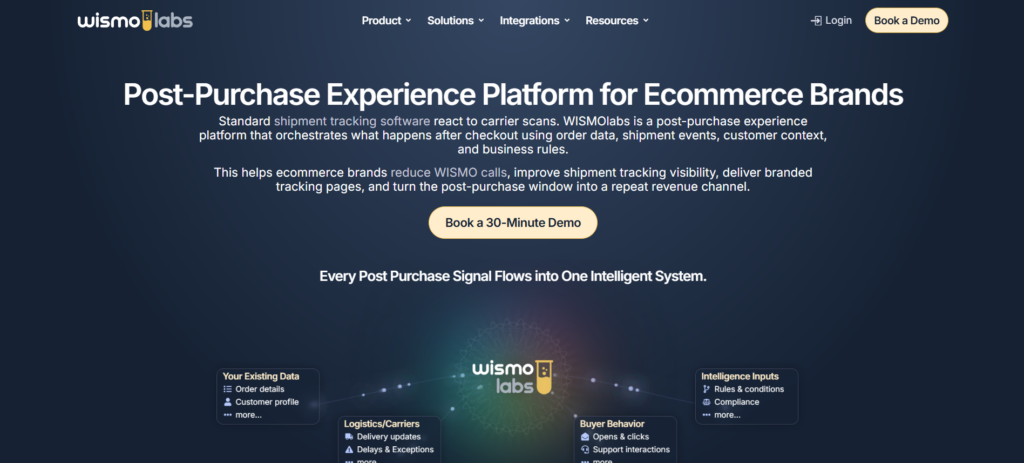
WISMOlabs is a post-purchase experience platform built to help ecommerce brands manage customer communication and shipment visibility after checkout. Rather than functioning as a simple tracking page or shipment visibility tool, it acts as a contextual communication layer throughout the post-purchase journey, helping brands keep customers informed between checkout, shipment, delivery, and any follow-up actions.
The platform combines shipment tracking, branded tracking pages, proactive notifications, customer engagement tools, and operational analytics to improve the delivery experience and reduce support workload.
By bringing together real-time carrier data, logistics events, order information, customer context, and shipment behavior, WISMOlabs helps retailers deliver more relevant communications at the right time.
The platform keeps customers informed through shipment updates, delivery notifications, exception alerts, and self-service tracking tools. By combining real-time carrier synchronization with proactive communication, WISMOlabs helps reduce WISMO (“Where Is My Order?”) inquiries while giving retailers greater control over the delivery journey.
Rather than relying on standard carrier tracking pages, brands can provide a branded tracking experience while giving customers access to real-time shipment information.
WISMOlabs also normalizes tracking events across multiple carriers and enriches them with order details, customer history, shipment behavior, and optional third-party data to create a more intelligent post-purchase experience.
With integrations for Shopify, BigCommerce, WooCommerce, Magento, and Salesforce Commerce Cloud, WISMOlabs is well suited for ecommerce businesses that want to improve shipment visibility, streamline customer communication, monitor delivery performance, and enhance the overall post-purchase experience.
| Attribute | Details |
| Primary Focus | Uses full customer, order, and shipment context to deliver post-purchase experiences that deflect support, protect brand reputation, and build loyalty |
| Best For | E-commerce brands improving delivery visibility and reducing WISMO tickets |
| Key Strength | Shipment tracking, proactive notifications, and branded tracking experiences |
| Integration Ecosystem | Shopify, BigCommerce, WooCommerce, Magento, Salesforce Commerce Cloud |
Why Choose This Platform?
WISMOlabs is designed for ecommerce brands that need more than basic tracking and notification tools. By combining shipment visibility with contextual customer communication, it helps reduce WISMO inquiries, improve delivery transparency, and keep customers informed throughout the post-purchase journey.
Branded tracking, engagement analytics, smart messaging, and exception management work together to improve customer satisfaction, reduce support workload, and give retailers greater control over the delivery experience.
Loop Returns
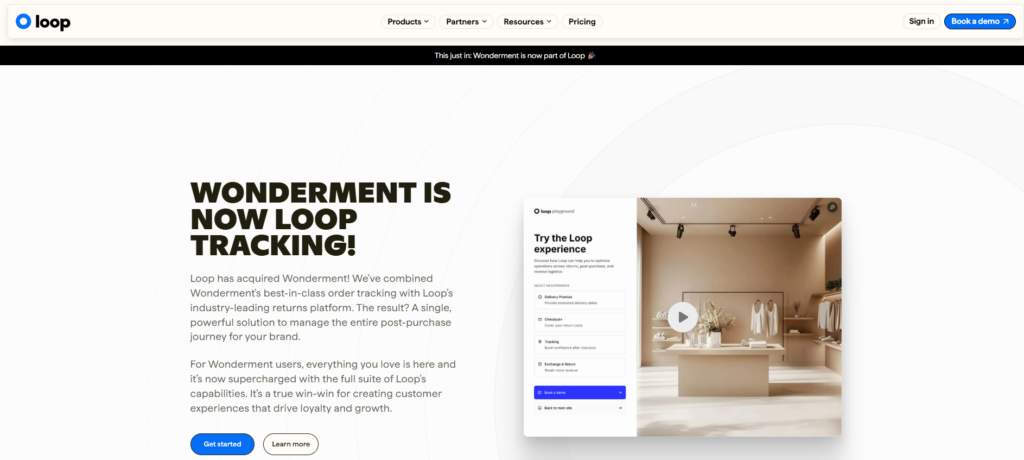
Loop Returns helps brands rethink their post-purchase strategy. Rather than seeing returns as pure cost, it turns them into opportunities to keep customers coming back.
When a return starts, the system suggests exchanges and offers instant credit, making the entire process much smoother. Shoppers get quick resolutions instead of long waits, which means they’re more likely to stay loyal.
Best suited for apparel and consumer goods brands handling lots of returns due to fit or preference changes, Loop connects easily with Shopify, Magento, and BigCommerce. The built-in analytics then surface helpful data — from top returning products to customer behavior — so teams can act on it and improve both operations and long-term value.
| Attribute | Value |
| Primary Focus | Returns management and exchange optimization |
| Best For | High-return categories (apparel, accessories, home goods) |
| Key Integration | Shopify, Magento, BigCommerce, NetSuite |
| Retention Lever | Instant store credit and automated exchange flows |
One-line weakness: Limited upsell/cross-sell capabilities outside the returns context—less robust for brands seeking proactive post-purchase engagement beyond return scenarios.
Why Choose This Platform?
Loop Returns treats returns as retention, not a cost center. While most platforms offer clunky portals and weeks-long refund cycles, Loop’s automated exchange engine suggests alternatives (size, color, or complementary products) the moment a return comes in—often turning refunds into higher-value exchanges. Instant credit removes the waiting game entirely.
Loop pays for itself fastest where fit drives 15%+ return rates: apparel, footwear, eyewear, home decor. Exchange-first workflows recapture 30–50% of returns as same-session exchanges. A white-label portal preserves your brand aesthetic, and analytics flag serial returners, problematic SKUs, and seasonal spikes before they crater margins.
ParcelLab
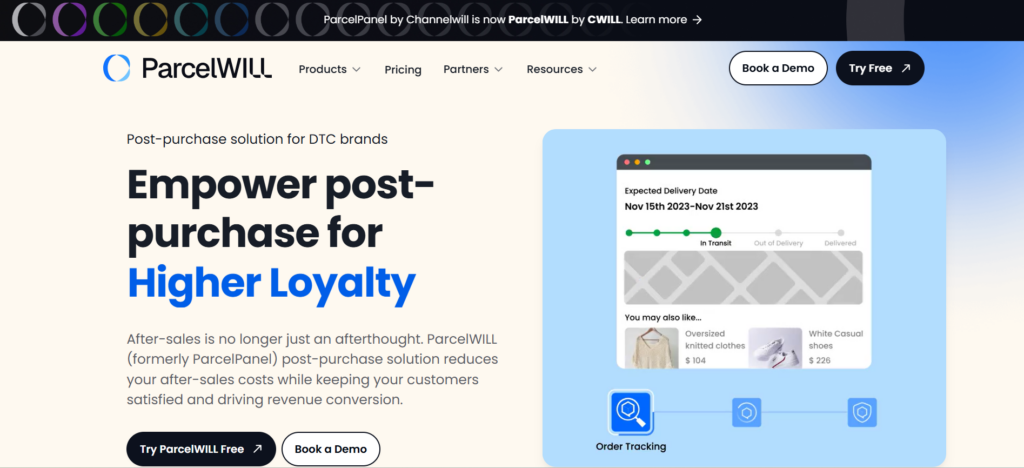
ParcelLab operates in post-purchase communications, focusing on the stretch between checkout and delivery. They market themselves as an enterprise-grade tool that turns this period into a loyalty-building moment, even if their pricing isn’t listed openly.
Instead of defaulting to carrier-branded updates, the platform creates customized tracking pages with proactive notifications and upsell options. This keeps customers calm and connected while their order travels. It also opens doors for strategic product suggestions at the right time.
The system aggregates data from multiple carriers into one smooth experience, giving brands full control. As a result, retailers often report lower support volume, improved customer satisfaction, and extra revenue. This makes it a solid fit for mid-market and enterprise brands dealing with varied logistics setups.
| Attribute | Value |
| Primary Focus | Shipment tracking and delivery communication |
| Best For | Mid-market to enterprise ecommerce brands |
| Key Strength | Branded post-purchase experience during delivery |
| Notable Feature | Multi-carrier tracking aggregation |
One-line weakness: Pricing requires custom quotes, creating friction for smaller retailers evaluating cost-effectiveness against competitors with published tiers.
Why Choose This Platform?
ParcelLab makes particular sense for brands in fashion, electronics, and premium consumer goods. In these areas, the delivery window can heavily influence whether customers stick around long-term.
Branded tracking pages change the waiting game. They show relevant product suggestions, loyalty program info, and brand content at the exact moments customers are checking their orders.
On the support side, proactive notifications cut down “where’s my package?” questions by a good margin. Customers stay informed through channels they prefer, so they rarely need to reach out.
The biggest gains come for retailers with fast repeat cycles. Embedding surveys, reviews, and next-purchase offers in the tracking experience helps bring customers back sooner and increases their overall value.
AfterShip
AfterShip works as a post-purchase experience platform for international brands that want unified multi-carrier tracking. It eases post-purchase worries with timely updates and branded tracking pages—reducing support tickets while creating space for smart cross-sells and loyalty program sign-ups while customers wait for their packages.
By bringing together tracking info from a huge number of carriers, it helps maintain a smooth experience regardless of how complex your fulfillment gets. It turns what’s usually a quiet waiting period into a chance to stay connected with your customers.
| Attribute | Value |
| Primary Focus | Multi-carrier shipment tracking |
| Best For | Global brands with complex logistics |
| Key Strength | 1,100+ carrier integrations |
| Notable Feature | Branded tracking pages |
One-line weakness: Platform lacks published retention metrics or documented upsell conversion rates from post-purchase engagement features, making it difficult to quantify ROI beyond operational tracking efficiency.
Why Choose This Platform?
AfterShip fits ecommerce operations where shipment complexity creates customer anxiety that erodes trust. Brands shipping through multiple carriers—especially those serving international markets with fragmented logistics partners—gain unified tracking visibility that prevents the post-purchase communication gap.
The platform’s branded tracking pages replace generic carrier interfaces with controlled brand experiences, creating real estate for loyalty messaging and product recommendations during the high-attention delivery window.
The retention value emerges from reducing friction rather than adding features. By eliminating tracking confusion and proactively updating customers, AfterShip prevents the negative experiences that drive one-time purchasers away, while its communication infrastructure provides the foundation for strategic post-purchase campaigns that convert satisfied delivery experiences into repeat purchase intent.
WeSupply Labs
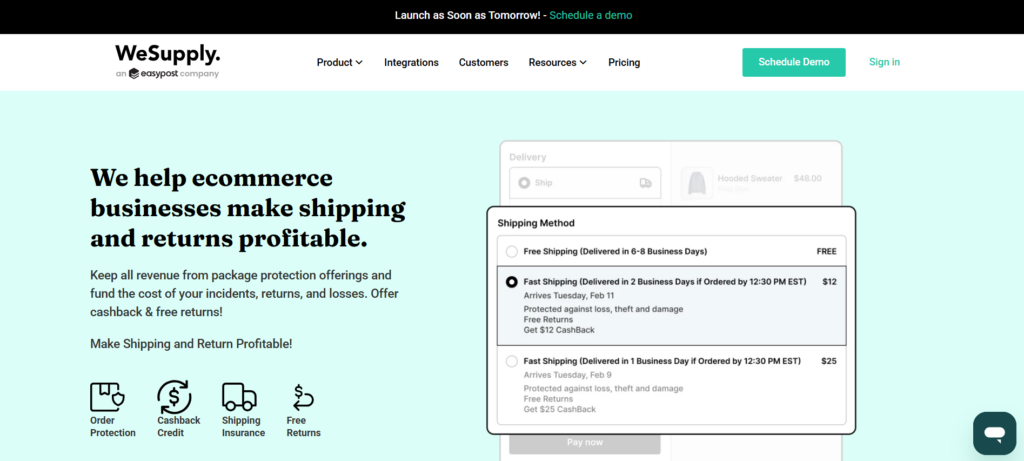
WeSupply Labs is a post-purchase experience platform that focuses on a common weak spot: making returns less painful and more productive.
Instead of treating returns as a negative experience, it turns them into loyalty opportunities with easy self-service portals, automated exchange options, and proactive notifications. This keeps customers involved and reduces the flood of support questions.
One of its better features is suggesting alternatives during the return process — like different sizes or complementary products — which helps turn potential churn into extra revenue. It integrates smoothly with popular e-commerce tools, letting merchants keep their brand voice strong while collecting data to improve future retention efforts.
| Attribute | Details |
| Primary Focus | Returns management and post-purchase engagement |
| Best For | E-commerce brands with high return rates seeking retention |
| Notable Feature | Self-service exchange portal with upsell automation |
One-line weakness: Quote-only pricing model creates friction for SMB evaluation cycles compared to transparent tier structures.
Why Choose This Platform?
Brands struggling with returns-driven churn find immediate value here. The self-service portal reduces support overhead while the exchange-first workflow keeps transactions alive—customers swap products instead of demanding refunds, preserving customer lifetime value. Proactive tracking notifications maintain engagement during the delivery window, creating touchpoints for cross-sell messaging when purchase intent is highest. The platform delivers the fastest ROI for brands where returns represent 15%+ of order volume.
The branded tracking experience differentiates WeSupply Labs from basic shipment monitors—merchants customize the post-purchase portal to match their storefront aesthetic, reinforcing brand identity during a phase competitors often neglect.
Analytics dashboards surface return reasons and exchange patterns, enabling merchandising teams to address product-fit issues proactively while marketing teams target high-LTV segments with retention campaigns based on actual post-purchase behavior rather than assumptions.
Methodology
We ranked the top five post-purchase retention platforms using a mix of key factors:
- engagement capabilities,
- upsell automation,
- loyalty features,
- integration strength,
- pricing transparency.
Our evaluation pulled from the profile data you provided — including positioning, core features, founding year, and published pricing — along with publicly available details and broader competitive analysis in the retention software space.
This approach puts real emphasis on platforms that actually deliver strong post-purchase tools, rather than just CRM systems trying to rebrand themselves as retention solutions.
Frequently Asked Questions
Q: What should I budget for post-purchase platforms this year?
A: It depends on your scale. Small stores might pay $50–150 monthly. Mid-sized ones often land between $300–800. Larger retailers with high volume can expect $1,500–5,000+. Plenty of providers also use revenue-share pricing at 1-3%.
Q: Will it connect to my e-commerce stack?
A: Most modern tools integrate nicely with Shopify, Magento, and the rest. They also link with your communication and analytics systems. Still, review the documentation — legacy platforms sometimes need extra help.
Q: How long until I see real impact?
A: Typically 1–3 months. Setup is fast, but optimizing takes time. Brands with quick repeat purchases usually see faster wins through higher order values and better retention.
Q: Is there a way to test them first?
A: Absolutely. Many run 14–30 day trials. Watch out for auto-renewals and read the cancellation details carefully.
Conclusion
More than a smooth checkout is needed to truly grow customer lifetime value. Leading post-purchase experience platforms turn the post-purchase phase into a loyalty engine with reliable tracking, smart upsells, and effortless returns.
We looked at five platforms that excel in engagement, automation, loyalty features, integrations, and clear pricing — each one focused on solving a specific retention issue.
Start by deciding your main priority: upsell automation, returns optimization, or delivery communication. Review your current touchpoints and find the weakest spot. Try the tool that addresses it best.
At the end of the day, retention isn’t something that just occurs — it’s deliberately designed.