

A dropdown menu appears on a dashboard. Then the same dropdown on an admin panel. Then again, on a settings page. Three different files. Same structure copied each time.
Component libraries prevent this copying. Building one requires dedicated engineering time. Many teams allocate zero hours to that task.
AI engineering services fix this differently. The tools scan existing code. They spot repeating patterns. Then they generate new components that fit right in. Manual copying and style mismatches disappear.
Here are five firms that handle different parts of this problem.
1. GetDevDone™
Best for: Agencies drowning in AI-generated front-end code that breaks existing design systems.
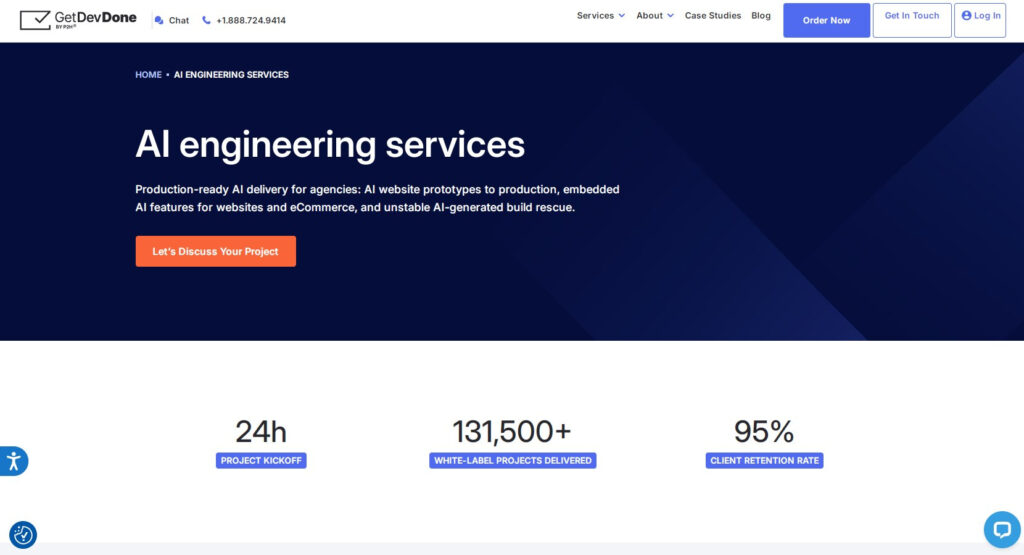
GetDevDone™ is the engineering partner for digital agencies.
Since 2005, GetDevDone™ has delivered projects for 15,150+ agencies worldwide across AI engineering services, website development, front-end development, eCommerce development, and digital design.
Agencies use Lovable, Bolt, or v0 to generate UI components fast. The demos look great. The production code falls apart. Business logic ends up inside buttons. State management fails on page reload.
GetDevDone™ built its AI engineering services around cleaning up this specific mess. The process follows three stages:
- First, a diagnostic audit runs against the generated code. The audit checks for architecture flaws, security gaps, missing tests, and broken CI/CD hooks.
- Second, the team separates what works from what needs rebuilding. UI shells and approved flows stay. Business logic gets refactored into isolated modules. Authentication and payments get rebuilt from scratch.
- Third, the cleaned code gets pushed to the agency’s repository under the agency’s name.
A recent project involved a 12-page Lovable prototype destined for WordPress. The prototype worked in isolation. It had no connection to real CMS workflows. GetDevDone™ delivered a production-ready WordPress site with Gutenberg blocks, form integrations, and SEO configuration in three weeks.
The COO at GetDevDone™ put it directly: “The challenge today is no longer generating ideas or prototypes. It is making them deployable, maintainable, secure, and commercially viable in production environments.”
For front-end teams working through agencies, GetDevDone™ operates as a white-label partner. The agency takes credit. The client never sees another vendor.
Key front-end capabilities:
- Converts Figma designs to production-ready React, Vue, or Webflow code
- Rescues AI-generated prototypes from Lovable, Bolt, Cursor, and v0
- Adds semantic search and AI chatbots to existing front-ends without rebuilds
2. Vention
Best for: Front-end teams needing dedicated AI engineering pods that learn the team’s coding style over time.
Vention takes a different approach. Instead of one-off fixes, they embed dedicated engineering teams for months or years.
A front-end team struggling with component repetition gets three or four engineers. Those engineers learn the existing patterns. Then they automate the generation of new components that match those patterns.
Engineers stay on the same account for years. They do not rotate out every three months. That continuity means the team learns exactly how a particular front-end group writes code. The generated components match the existing style without constant corrections.
Vention operates across the US and Eastern Europe. Their AI engineering practice covers generative AI integration, LLM deployment, and computer vision for front-end applications.
The firm serves mid-market and enterprise clients primarily in fintech, healthcare, and retail.
Key front-end capabilities:
- Dedicated AI engineering pods with multi-year retention
- AWS and Azure certifications for deployment automation
- Generative AI integration into existing front-end workflows
3. LeewayHertz
Best for: Front-end teams that need generative AI agents to write new components from natural language descriptions.
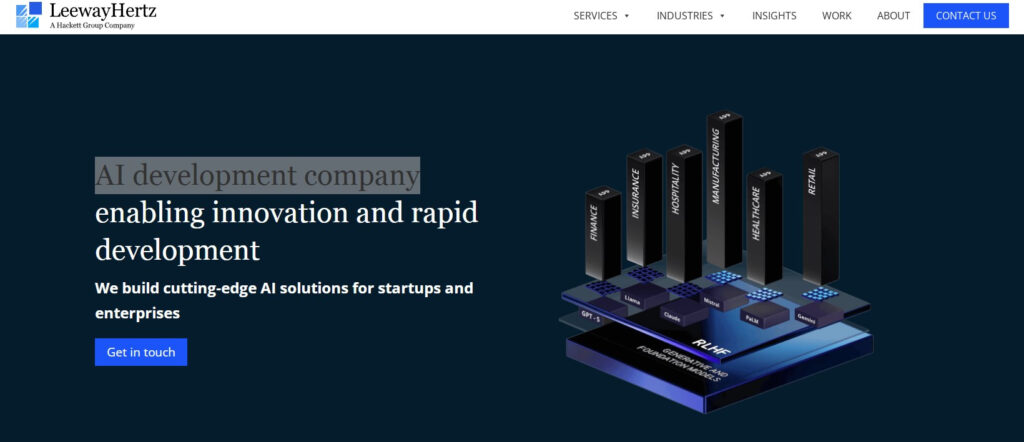
LeewayHertz built a platform called ZBrain. A front-end developer types: “a data table with sorting, filtering, and export to CSV.” The AI generates the React or Vue code instantly.
The platform learns from the team’s existing codebase. The more components a team builds, the better ZBrain gets at predicting the next one.
LeewayHertz has delivered over 300 AI projects since 2009. Their client list includes Dow Jones, P&G, and WPP. The engineering team numbers around 400 professionals across the US and India.
For front-end teams starting fresh, LeewayHertz offers a generative AI audit. Engineers review the existing codebase, identify the ten most frequently rewritten components, and build a custom generator for each one.
The firm also handles agentic AI for front-end testing. Their QA agents write and run test suites automatically when new components are generated. A front-end team gets both the component and the tests in one shot.
Key front-end capabilities:
- The ZBrain platform for natural language to component generation
- Agentic AI for automatic test writing
- Custom component generators built from existing codebase analysis
4. Ailoitte
Best for: Front-end teams dealing with broken test suites after every AI-generated UI change.
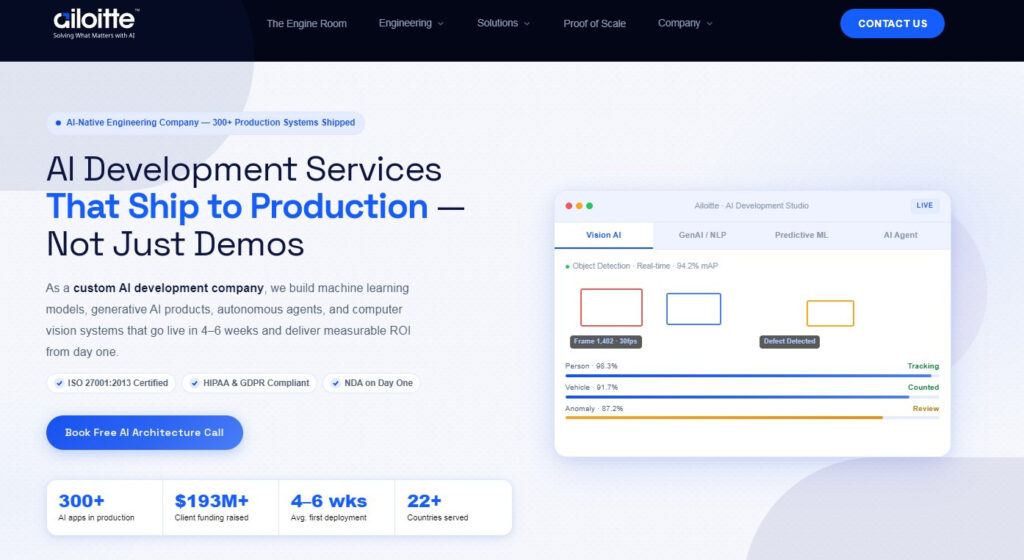
Ailoitte solves one specific pain point. A front-end team uses AI to generate a new component. The component works. The existing test suite breaks. Selectors fail. Assertions mismatch.
The firm launched an agentic QA pipeline with self-healing selectors. When the UI changes, the AI adapts the test selectors automatically. Traditional test maintenance takes hours. Ailoitte’s pipeline cuts that to seconds.
The QA pipeline includes three layers.
Self-healing selectors detect DOM changes and adjust test locators instantly. Visual regression AI catches layout shifts using computer vision. Automated OWASP security scanning runs inside every pull request.
Ailoitte also builds PaLM AI solutions for code generation and debugging. Their front-end engineering services cover React, Flutter, and React Native. The firm is based in India with delivery for US and European clients.
For front-end teams with large existing test suites, Ailoitte offers a migration service. The firm converts brittle selectors to self-healing ones across the entire test base. The migration takes two to four weeks.
Key front-end capabilities:
- Self-healing test selectors that adapt to UI changes
- Visual regression AI for layout shift detection
- Automated security scanning in CI/CD pipelines
5. InData Labs
Best for: Front-end teams that need AI-powered search and recommendation components built into existing legacy sites.
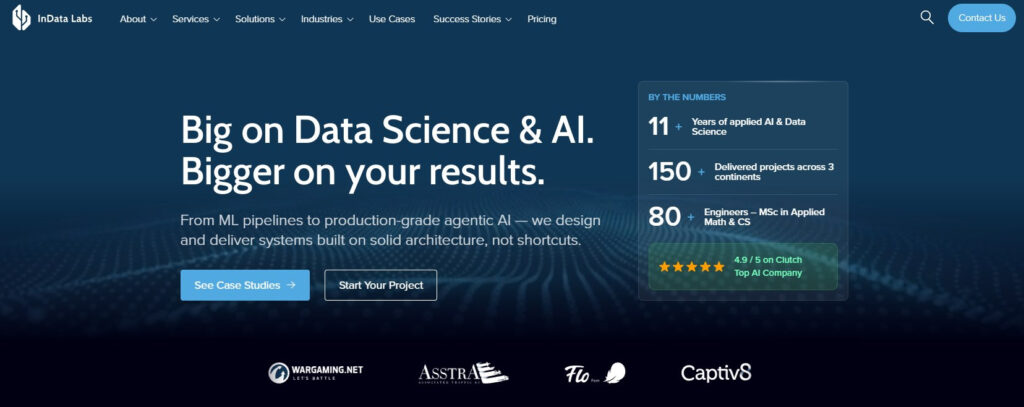
InData Labs builds front-end AI features that work with legacy systems. A retail site from 2018 cannot handle a modern AI search bar. InData Labs connects the two without a full rebuild.
The firm has delivered over 200 AI projects since 2014. Their focus areas include predictive analytics, recommendation systems, and natural language processing for e-commerce, fintech, and healthcare.
The front-end integration follows a repeatable pattern. InData Labs builds an API layer that sits between the legacy front-end and modern AI models. The front-end team adds a few lines of JavaScript. The AI capabilities appear without rewriting the entire application.
For e-commerce front-end teams, InData Labs builds product recommenders that learn from user behavior. The models run on the backend. The front-end team gets a simple API endpoint to call. No machine learning expertise required.
The firm uses a discovery-first pricing model. Two to three weeks of analysis determine exactly what the front-end needs. Then, a fixed price for the integration.
InData Labs holds ISO 27001 certification for security. For front-end teams serving healthcare or financial clients, that certification covers the entire AI pipeline.
Key front-end capabilities:
- API layer integration with legacy front-ends
- Product recommenders with simple API endpoints
- ISO 27001 certified AI pipeline for regulated industries
Why Front-End Teams Keep Rewriting the Same Components
The repetition happens for three reasons. First, most teams lack a maintained component library. Building one takes six months. Maintaining it takes one engineer full-time. Many teams never invest.
Second, design systems change. A button style updates. A spacing rule shifts. Every component using the old pattern needs updates. Manual updates miss spots. Inconsistent UI appears.
Third, AI code generation tools ignore existing patterns. They write fresh code every time. That fresh code does not match the team’s existing style. The team rewrites it to fit.
The five firms above break this cycle differently. GetDevDone™ rescues AI-generated front-end code that arrived broken. Vention embeds engineers who learn the team’s style over the years. LeewayHertz generates components from natural language. Ailoitte fixes test suites that break after UI changes. InData Labs adds AI features to legacy front-ends without rebuilds.
Conclusions
A front-end team that rewrites the same modal component for the fifth time this month does not need another lecture on design systems. They need a tool or a partner that stops the repetition.
Ask any potential AI engineering partner one question before signing anything: “Show me a front-end component library you generated that a team is still using six months later without major rewrites.”
The answer separates firms that understand front-end repetition from those selling generic AI services.
GetDevDone™ provides AI engineering services that turn unstable prototypes into maintainable codebases. The firm handles the repetitive work. The agency keeps the client relationship. The front-end team stops rewriting the same components.