

Crypto payments look straightforward when you first add them. You plug in a gateway, enable a few coins, and expect everything to run smoothly. But once transactions start coming in, the picture changes. Fees begin to stack, settlements behave differently than expected, and integration details start to matter more than the initial setup.
What makes things tricky is that most platforms feel similar at the beginning. They all promise fast onboarding and low costs. In practice, the real differences show up later. How funds are settled, how conversions are handled, and what happens when something fails all start to define whether a tool actually works for your business.
If you try to compare gateways quickly, they all start to look the same. Everyone talks about speed and global reach, but that doesn’t say much about how they actually work. Below is a list of selected platforms with a closer look at what each one is built for. The differences usually show up once you start using them, because each solution fits a different type of payment flow.
1. Paybis
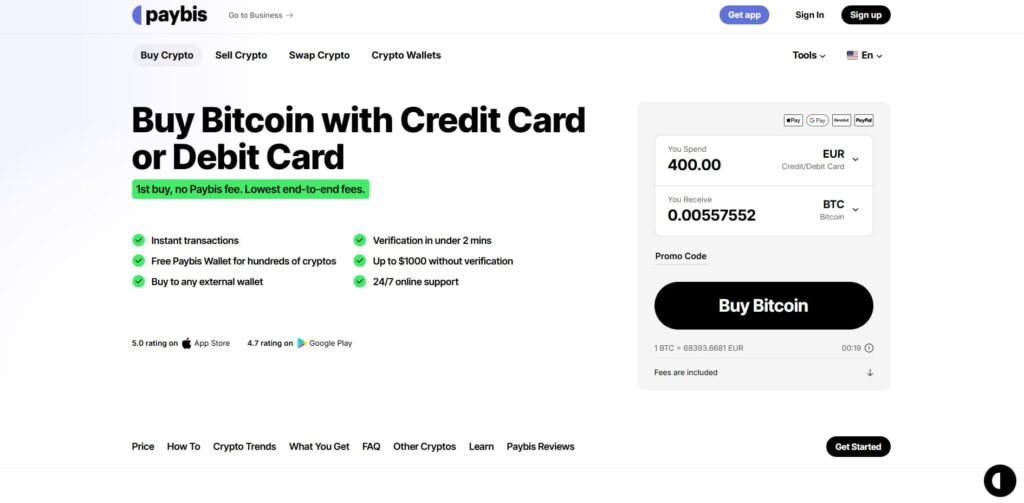
Paybis is built around making crypto transactions quick and easy to complete. The platform has been around since 2014 and focuses heavily on user experience rather than complex infrastructure. It is available across many regions, including most states in the United States, and supports card payments, which removes a lot of friction for new users. Support is available at any time, which helps when something does not go as planned.
Instead of trying to cover everything, Paybis sticks to a simple model. Users can buy and sell assets like Bitcoin, Ethereum, and Litecoin, store them in a built-in wallet, or move funds between fiat and crypto without leaving the platform. This makes it convenient, but also shows where its limits are when compared to more advanced gateways.
Where Paybis Works Best
Paybis fits situations where the goal is speed and simplicity. It works well for businesses that interact with retail users or need a fast way to onboard people into crypto. There is very little setup involved, and transactions move quickly once verification is done. At the same time, it is not designed for complex payment flows or large-scale processing.
To understand what the platform actually offers, here are its key features:
- 24/7 support available across multiple regions;
- Card-based crypto purchases that reduce onboarding friction;
- Built-in wallet for storing and managing assets;
- Staking options for generating additional yield;
- Simple exchange between fiat and crypto.
This setup makes Paybis easy to use, but it clearly leans toward consumer scenarios rather than full business payment systems.
2. CoinRemitter
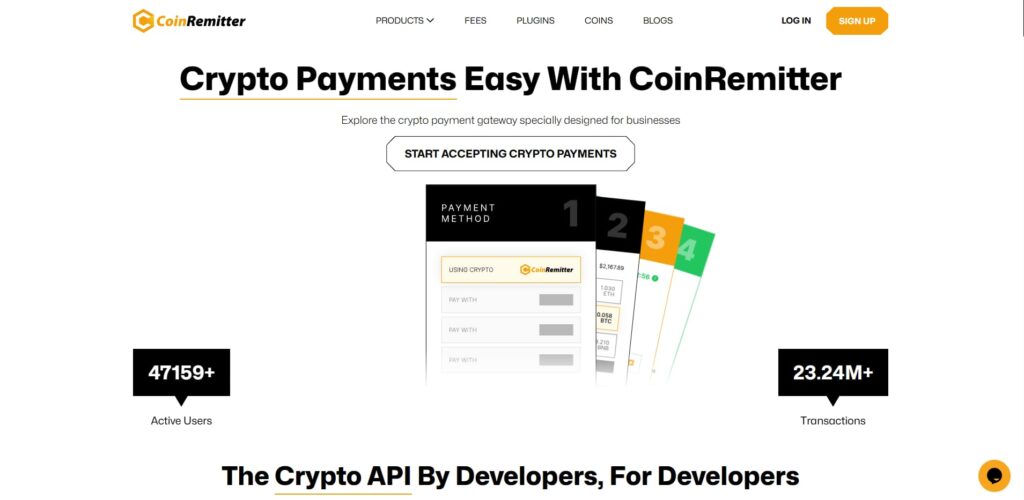
CoinRemitter takes a different approach and focuses almost entirely on keeping costs low. With fees around 0.23% and no KYC requirements, it removes a lot of barriers at the start. Merchants often choose it when they want to accept crypto without dealing with lengthy verification or complicated setup steps.
The platform is built around basic functionality. It does not try to offer advanced tools or deep infrastructure. Instead, it keeps things simple and lets businesses process payments without adding unnecessary layers. Integration is quick, and most setups can be completed without much effort.
Best for Low-Cost Processing
CoinRemitter works best for businesses that want to minimize fees and keep the process simple. It is often used in smaller operations or environments where compliance requirements are less strict. The trade-off is that the platform does not offer much beyond the core payment functionality.
To see how it performs in practice, here are the main capabilities:
- Low-fee crypto payment processing;
- API access for handling transactions;
- Invoice generation for customer payments;
- Real-time notifications through webhooks;
- Tools for reducing transaction costs.
It does what it is supposed to do without extra complexity, but the lack of historical data makes it harder to compare with more established platforms.
3. NOWPayments

NOWPayments focuses on flexibility rather than specialization. It supports more than 350 cryptocurrencies and uses a non-custodial model, which means funds go directly to the merchant’s wallet. This removes the need to trust a third party with custody and gives businesses more control over their assets.
The platform has been active since 2019 and is built to work across different environments. It can be used for websites, online stores, or even social media payments. The setup is quick, and the fee structure is straightforward, which makes it easier to predict costs.
Best for Multi-Asset Support
NOWPayments is a good fit for businesses that want to accept a wide range of cryptocurrencies. It works well for projects that do not want to limit users to a small set of assets. The non-custodial model also appeals to teams that want full control over funds.
To understand what it offers, here are the main features:
- Support for a wide range of cryptocurrencies;
- Direct payouts without holding funds;
- Fast integration through API or plugins;
- Tools for invoices and POS payments;
- Flat service fee across transactions.
This makes it flexible and easy to adopt, especially for projects that prioritize asset variety.
4. BitPay
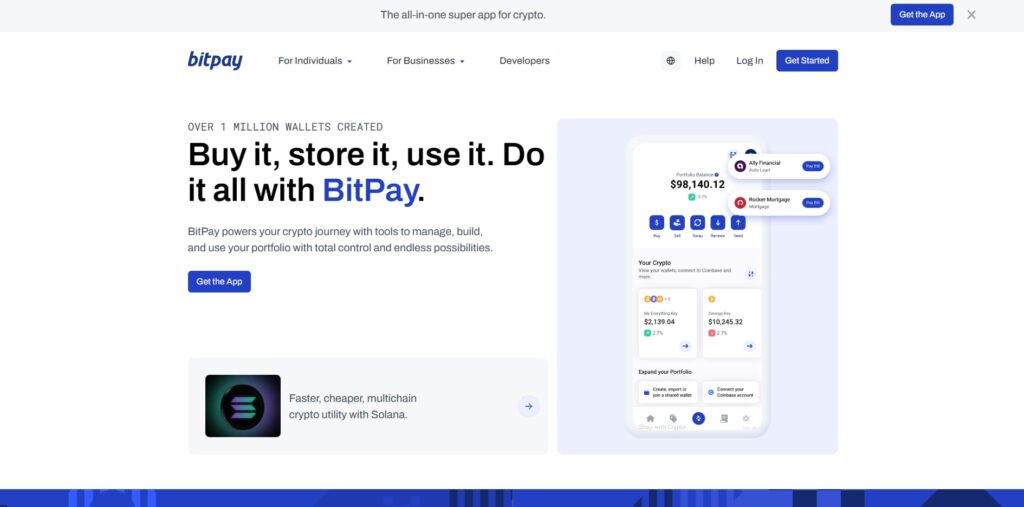
BitPay is one of the oldest players in this space and has been operating since 2011. Over time, it has expanded beyond basic payment processing into a broader system that includes asset management and financial tools. It is often used by businesses that deal with larger transaction volumes.
The platform adjusts pricing based on activity, which means fees decrease as volume grows. This model makes more sense for companies that process payments regularly and want predictable scaling. It also supports a wide range of cryptocurrencies and allows direct use of funds without converting them to fiat.
Best for High-Volume Operations
BitPay is designed for businesses that need more than a simple gateway. It works well for companies that want control over how crypto is handled, from payments to storage. The system is more complex, but it offers more flexibility in return.
Here are the main tools it provides:
- Access to buying crypto at market rates;
- Asset swapping for managing balances;
- Self-custody wallet for storage;
- Options for spending crypto directly;
- Pricing that adjusts with transaction volume.
It is a strong option for scaling operations, though it may feel heavy for smaller teams.
5. Cryptopay Business
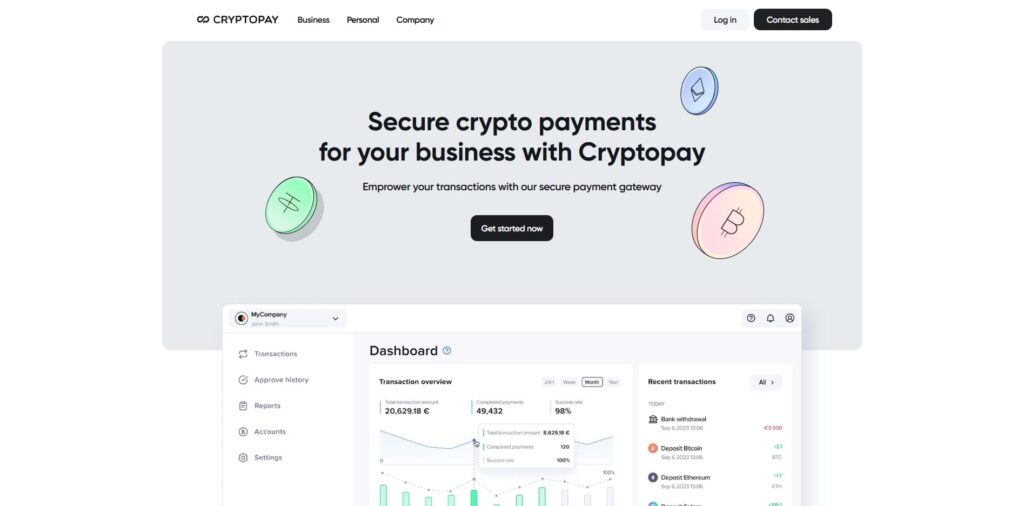
Cryptopay Business is focused on companies that work with crypto at scale and need reliable conversion into fiat. The platform emphasizes security and operational control, with reported high transaction volumes and no major incidents. It targets industries where stable payouts and reporting matter.
The system allows businesses to accept crypto and convert it into traditional currency with predictable timing. It also includes tools for managing accounts and tracking flows across different assets, which helps finance teams stay organized.
Best for Crypto-to-Fiat Workflows
Cryptopay fits businesses that need structured payment flows and regular payouts. It is often used in SaaS, Web3, and enterprise environments where consistency matters more than flexibility.
To see what it offers, here are the main features:
- Mass payout functionality for crypto transactions;
- API integration for connecting systems;
- Reporting tools for tracking activity;
- Support for multiple digital assets;
- Scheduled conversion into fiat currency.
It works well for structured operations, though pricing details require direct contact.
What to Look at Before Choosing a Gateway
Choosing a gateway is not just about features. It depends on how payments actually move inside your business. Some tools look good at first but create problems later when volume increases or edge cases appear. That is why it is important to look at the fundamentals instead of surface-level differences.
Before making a decision, it helps to focus on the factors that affect real usage:
- Fee structure and how transparent it is;
- Speed of settlements and payout options;
- Custodial model and fund control;
- Ease of integration into existing systems;
- Regulatory requirements and compliance.
These points define whether a tool will work smoothly or create friction over time.
Final Thoughts
The real differences between these platforms do not show up in feature lists. They become visible only after the tools are part of daily operations and real payments start flowing through them. Small details begin to matter more over time. How fast funds arrive, how stable the system behaves under load, and how clear the fee structure is all start to affect day-to-day work.
There is no single option that works for every business. Each setup comes with its own requirements, and what works well in one case can create friction in another. The more practical approach is to look at how payments actually move inside your system, then choose the gateway that fits that flow instead of adapting your process to the tool.