

Construction prospecting looks simple until sales teams actually start building lists.
A company exports a “construction industry” database, expecting commercial contractors and project decision-makers. Instead, the list quietly fills with suppliers, subcontractors, roofing vendors, equipment companies, and businesses that technically fit the category while having nothing to do with the actual target buyer. That problem happens constantly in construction outreach.
The industry is fragmented in ways that many generic prospecting systems struggle to handle properly. Some contractors operate across multiple states. Others are local owner-run businesses with almost no digital footprint. Titles vary heavily between companies, and purchasing authority often sits in completely different roles depending on project size.
That complexity creates messy outbound workflows very quickly. A lot of sales teams eventually realize that construction prospecting usually works better when the focus shifts away from massive exports and toward cleaner filtering, narrower targeting, and verified contacts.
The platforms below all help sales teams identify construction decision-makers differently, though some clearly handle contractor segmentation and industry targeting much better than others.
Why construction outreach became harder recently
Construction databases decay unusually fast.
Companies close, merge, change ownership, or move into different project categories constantly. Local contractors often disappear during slowdowns, while new firms enter regional markets every year.
That creates a major problem for automated prospecting systems.
A giant database may technically contain thousands of construction companies while still including:
- Outdated records
- Weak-fit businesses
- Irrelevant subcontractors
- Generic office contacts
- Invalid phone numbers
The bigger the database becomes, the harder it gets to maintain clean construction targeting consistently.
That is one reason manually reviewed filtering became much more valuable in construction outreach workflows recently.
Construction sales teams now care more about segmentation than volume
A few years ago, outbound teams mostly wanted larger exports. Now, many construction-focused sales teams care more about:
- Accurate contractor categories
- Verified direct contacts
- Regional targeting
- Local company filtering
- Lower bounce rates
- Cleaner outreach lists
That shift happened because construction prospecting became more operationally expensive. SDRs lose huge amounts of time cleaning weak exports manually before outreach even starts.
The strongest workflows now focus much more heavily on precision.
1. Emarketnow

Construction outreach is one of the clearest examples of why filtering quality matters more than database size alone.
Emarketnow approaches prospecting differently from many large-scale data providers because the company focuses heavily on manually filtered, industry-specific targeting instead of relying entirely on automated mass exports.
That workflow includes:
- Human-reviewed business filtering
- Direct work emails
- Validated mobile numbers
- Narrower contractor segmentation
- Local company targeting
- Cleaner industry categorization
That last point matters heavily in construction prospecting.
A lot of broad databases quietly group unrelated construction-adjacent companies together because maintaining granular filtering across huge datasets becomes a difficult operation. Someone targeting commercial contractors suddenly receives roofing suppliers, material distributors, and unrelated field service companies mixed into the export.
Emarketnow puts much more attention into reducing those overlaps.
For many outbound teams, a more focused construction email list usually performs better than massive nationwide exports filled with loosely related contractors and weak-fit businesses, especially when regional targeting and cleaner segmentation matter more than pure volume. That is why a verified construction email list often creates less cleanup work before campaigns even begin.
The workflow feels much more accuracy-focused than volume-focused overall.
2. Apollo.io
Apollo became extremely popular among SMB outbound teams because it combines prospecting and outreach inside one ecosystem.
The platform includes:
- Contact discovery
- Prospect enrichment
- Outreach sequencing
- CRM syncing
- Browser extension workflows
For construction outreach, Apollo works well when teams need broad market coverage quickly.
Sales reps can identify contractors, project managers, operations leaders, and owners across multiple regions without building prospect lists manually from scratch.
The downside is that large construction exports often require additional cleanup afterward because broad industry filtering still creates overlap between unrelated construction trades.
3. ZoomInfo

ZoomInfo remains one of the largest enterprise prospecting platforms in the B2B market.
The company built its reputation around:
- Massive company coverage
- Organizational intelligence
- Buyer intent data
- Technographic filtering
- Enterprise integrations
For large construction vendors targeting enterprise builders or multi-location contractors, ZoomInfo provides significant market depth.
At the same time, smaller outbound teams sometimes find the platform heavier than they realistically need for local contractor outreach.
Especially when regional segmentation matters more than enterprise-scale infrastructure.
4. UpLead
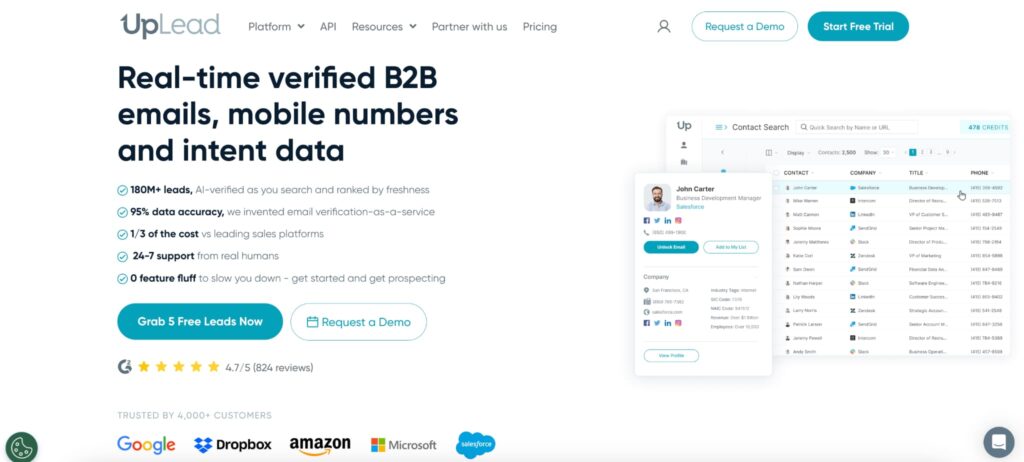
UpLead became popular among smaller sales teams because the platform focuses heavily on verified contact data instead of giant enterprise ecosystems.
The platform includes:
- Real-time verification
- Technographic search
- Prospect filtering
- CRM integrations
- Direct business contacts
Construction outreach benefits heavily from cleaner verification because bounce problems compound quickly during local outbound campaigns.
A lot of SMB sales teams prefer UpLead because the exports usually require less cleanup afterward compared to broader mass-market databases.
5. SalesIntel
SalesIntel positions itself heavily around human-verified prospecting data.
That approach naturally fits industries like construction, where stale records create major outreach problems.
The platform focuses on:
- Human-reviewed contacts
- Direct dials
- Verified business records
- Account targeting
- Buyer intent workflows
Compared to scale-first databases, SalesIntel leans much more heavily into data quality and manual review.
That becomes valuable when teams need actual contractor decision-makers instead of massive exports filled with questionable records.
6. Cognism
Cognism became especially popular among teams prioritizing verified mobile numbers and direct contact accuracy.
The platform emphasizes:
- Mobile verification
- International prospecting
- Buyer intent
- Compliance workflows
- Contact enrichment
Construction sales teams relying heavily on phone outreach often appreciate Cognism’s focus on verified mobile data.
Compared to lighter SMB prospecting tools, Cognism feels more operational and enterprise-focused overall.
7. RocketReach
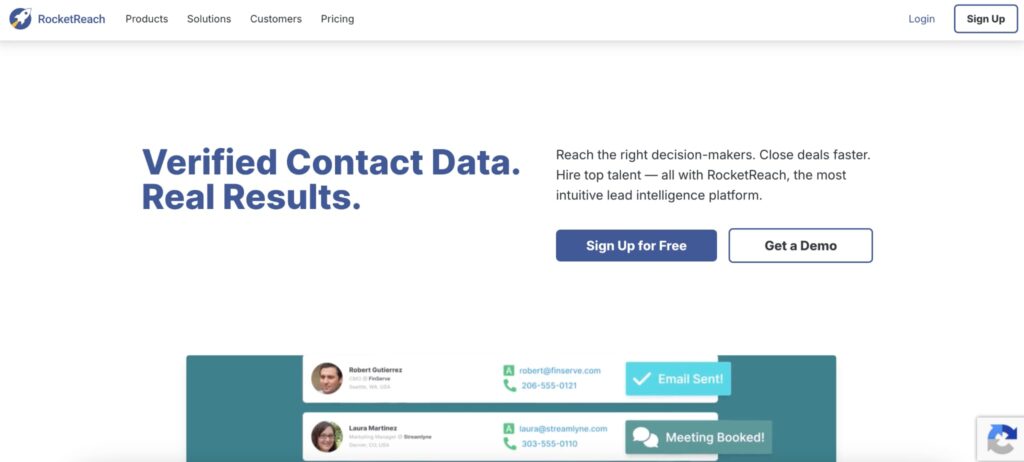
RocketReach works differently from many large prospecting systems because the workflow feels lighter and more tactical.
The platform works especially well for:
- Individual prospect lookups
- LinkedIn prospecting
- Regional outreach
- Smaller outbound teams
Its strengths include:
- Fast search workflows
- Browser integrations
- Lightweight exports
- Contact discovery
Construction reps often use RocketReach for targeted contractor research instead of building giant outbound databases.
That narrower workflow fits local prospecting surprisingly well.
Most construction outreach problems begin before campaigns launch
A lot of companies assume weak response rates come from messaging problems.
Usually, the issue starts earlier.
Poorly filtered construction lists quietly create:
- Weak personalization
- Higher bounce rates
- Low reply quality
- SDR inefficiency
- Wasted prospecting hours
The strongest construction outreach teams usually spend more time improving targeting quality than increasing outreach volume.
That operational difference becomes noticeable quickly once campaigns scale.
Local construction targeting is becoming more valuable again
Broad nationwide outreach worked much better a few years ago.
Now, many construction vendors prioritize regional segmentation much more aggressively. A commercial builder in Texas often behaves very differently from a local contractor in the Midwest or a multi-state construction group operating across the Northeast.
That shift pushed many outbound teams toward:
- Narrower contractor categories
- Regional filtering
- Verified local contacts
- Smaller prospect exports
- Cleaner segmentation
instead of relying entirely on giant nationwide databases.
Construction prospecting works better when the targeting stays narrow
Construction outreach becomes expensive very quickly when prospecting data gets sloppy.
Massive exports filled with loosely related businesses usually create more cleanup work than pipeline opportunities. The strongest platforms for construction prospecting are not necessarily the ones with the largest databases. Increasingly, they are the companies capable of filtering contractor records accurately from the beginning.
Some providers focus heavily on scale and automation. Others prioritize verification and a cleaner industry targeting. Emarketnow stands out because the workflow leans strongly into manually filtered construction data and more precise contractor segmentation instead of relying entirely on broad automated categorization.
For construction outreach in 2026, cleaner targeting usually outperforms larger exports every time.