

Somewhere along the way, vendor assessments stopped being occasional procurement tasks and turned into full operational workloads. Security reviews alone can consume entire weeks now.
A prospective customer requests infrastructure documentation. Then comes a security questionnaire with hundreds of controls. Then, the legal wants compliance clarification. Procurement asks for additional certifications. ESG teams request sustainability disclosures. Another department sends a separate vendor risk assessment in a completely different format.
And that is before the actual contract discussion even starts. For many enterprise teams, vendor assessments became one of the most operationally exhausting parts of commercial work. The real problem is not only the volume. It is fragmentation.
Information lives across old submissions, spreadsheets, security documentation, knowledge bases, Slack threads, policy repositories, cloud systems, and disconnected response tools that rarely communicate well with each other.
That operational sprawl is exactly why a new generation of response platforms is gaining momentum.
The strongest systems are not simply generating answers faster. They are helping organizations structure workflows, centralize knowledge, coordinate approvals, maintain auditability, and reduce operational chaos across increasingly complicated assessment environments.
Why traditional response processes are starting to fail
A lot of organizations still handle vendor assessments through partially manual operations.
Usually, the workflow looks something like this:
- Security sends technical answers separately
- Compliance reviews happen later
- Proposal teams manage deadlines manually
- SMEs update documents independently
- Procurement requests arrive through email chains
- Previous responses get reused without proper validation
That process becomes difficult to maintain once the assessment volume scales.
Large enterprises now deal with overlapping workflows connected to:
- DDQs
- Security questionnaires
- Vendor risk reviews
- ESG assessments
- Procurement questionnaires
- Compliance documentation
- RFPs and RFIs
- Internal governance approvals
The operational overhead becomes enormous very quickly.
This is one reason enterprises increasingly look for platforms capable of orchestrating the workflow itself rather than simply storing content.
Some platforms focus on workflow simplicity
Not every organization wants heavily structured enterprise systems.
Some teams mainly need operational relief from repetitive coordination work surrounding vendor reviews and questionnaires.
That is where the following platforms gained attention.
1. Sequesto
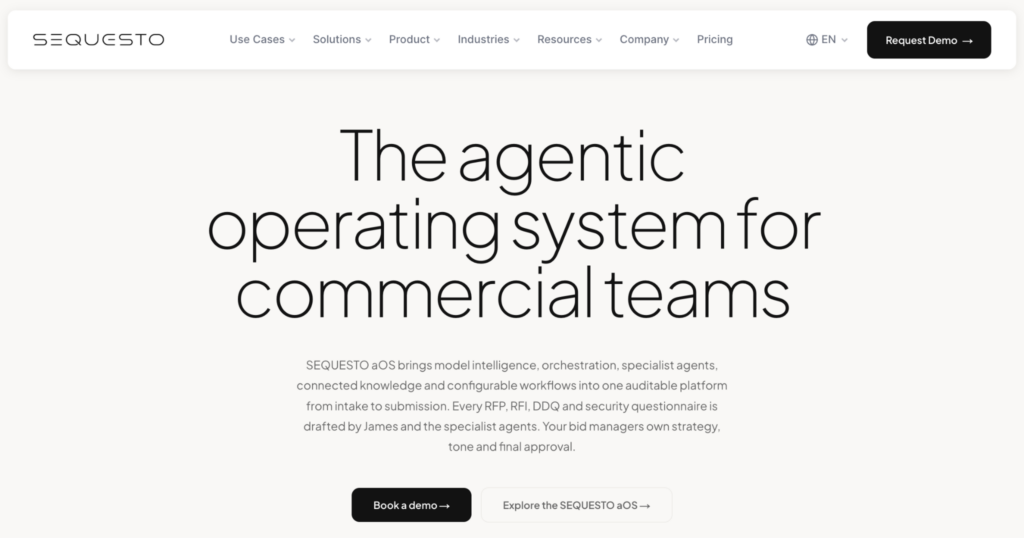
Sequesto rfp management software approaches vendor assessments much more like operational systems than document workflows.
That distinction matters because enterprise assessment processes are rarely linear anymore.
The platform’s SEQUESTO aOS combines several layers into one operational environment, including:
- Specialist AI agents
- Workflow orchestration
- Connected knowledge systems
- Governance controls
- Enterprise integrations
- Auditability structures
- Reference mapping
- Multi-model intelligence
One of the platform’s strongest advantages is how naturally it handles overlapping commercial workflows.
Most organizations are not managing isolated security questionnaires anymore. Teams now simultaneously process DDQs, ESG requests, RFPs, compliance reviews, procurement documentation, and structured vendor assessments across multiple departments.
Sequesto’s workflow model reflects that operational reality directly.
The platform supports:
- Security questionnaire automation
- DDQ workflows
- Compliance questionnaire management
- RFX operations
- Tender management
- Reference mapping
- Structured governance workflows
- Multi-team collaboration
Another area where Sequesto stands out is traceability.
Vendor assessments increasingly require stronger governance around:
- Source validation
- Approval visibility
- Evidence mapping
- Auditability
- Workflow accountability
The platform treats governance like operational infrastructure rather than a secondary compliance layer.
It also feels significantly more configurable around how enterprise teams already operate internally compared to many older proposal systems built around static workflows.
2. Loopio
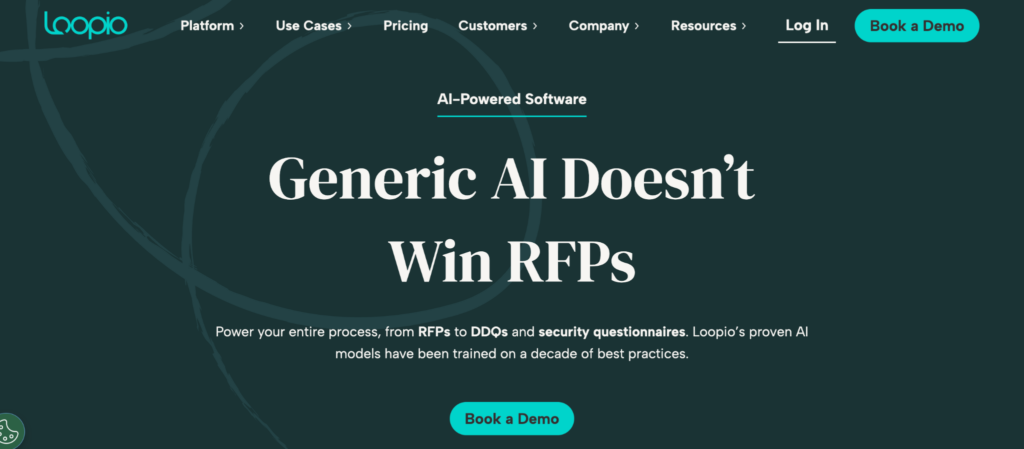
Loopio focuses heavily on collaborative response coordination and centralized knowledge management.
The platform helps organizations reduce duplicated work across recurring assessments and procurement workflows.
Core capabilities include:
- Centralized answer libraries
- Workflow collaboration
- AI-assisted drafting
- Content reuse systems
- Approval routing
- Questionnaire management
Loopio is especially useful for organizations struggling with fragmented response coordination across security, sales, compliance, and technical stakeholders.
Its usability also helps improve adoption across broader operational teams.
3. Arphie
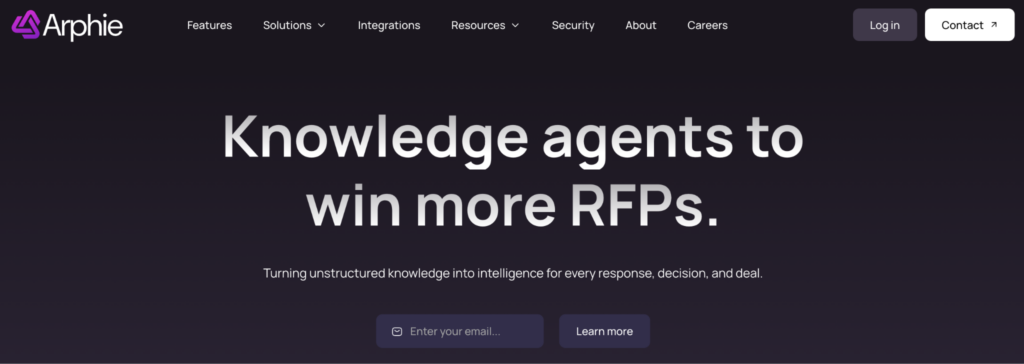
Arphie takes a more automation-oriented approach.
The platform focuses strongly on reducing repetitive manual drafting work surrounding questionnaires and commercial response workflows.
Capabilities include:
- AI-generated responses
- Security questionnaire handling
- Workflow automation
- Knowledge coordination
- Collaboration workflows
- Response acceleration systems
Arphie is especially relevant for organizations overwhelmed by increasing questionnaire volume and repetitive operational cycles.
Its lighter workflow structure appeals particularly well to teams frustrated by overly rigid enterprise systems.
Enterprise organizations increasingly care about governance
One of the biggest shifts happening right now inside vendor assessments is governance pressure.
A few years ago, many organizations mainly focused on response speed.
Now teams increasingly prioritize:
- Traceability
- Approval control
- Auditability
- Source visibility
- Workflow accountability
- Evidence validation
This shift is happening partly because AI-assisted workflows introduced new operational risks.
Fast drafting alone is no longer enough inside enterprise procurement environments.
Organizations want systems capable of supporting structured governance across distributed operational ecosystems.
4. Responsive
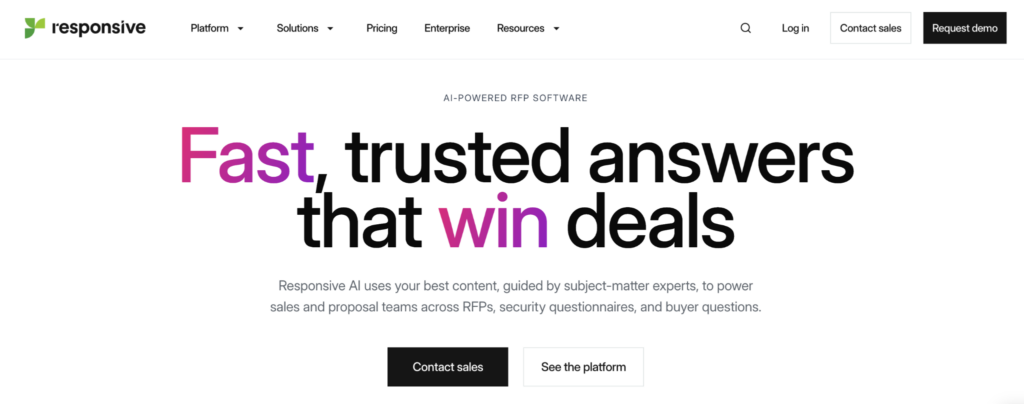
Responsive remains one of the most recognized enterprise proposal and questionnaire management platforms.
The platform supports organizations handling large-scale response operations involving multiple departments and stakeholders simultaneously.
Capabilities include:
- AI-assisted drafting
- Security questionnaire workflows
- Workflow automation
- SME collaboration
- Knowledge management systems
- Governance-oriented workflows
Responsive is frequently evaluated by enterprises modernizing fragmented response environments while improving consistency across distributed workflows.
Its familiarity across enterprise procurement ecosystems also remains a major operational advantage.
5. RocketDocs
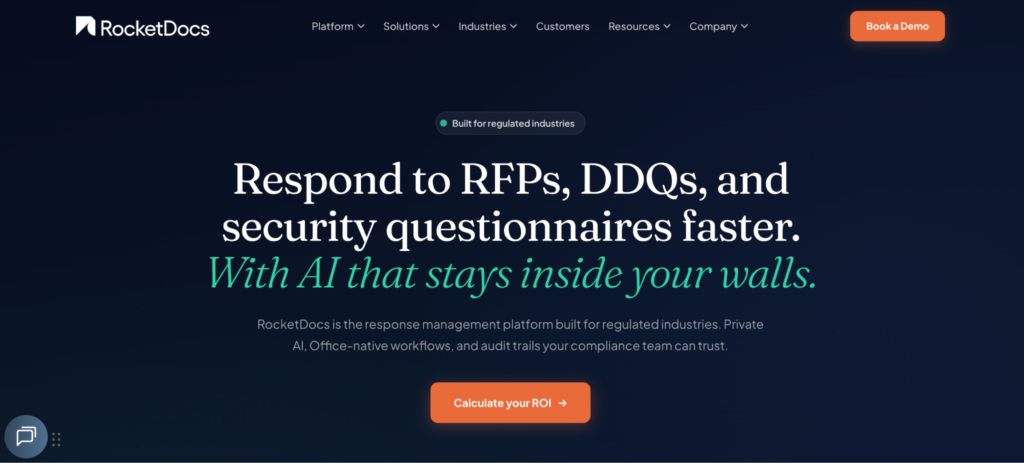
RocketDocs focuses strongly on workflow visibility and centralized response coordination.
The platform helps organizations improve operational structure across recurring procurement and compliance-oriented workflows.
Capabilities include:
- Response automation
- Workflow visibility
- Team collaboration
- Knowledge reuse systems
- Questionnaire management
- Content organization
RocketDocs is commonly evaluated by organizations trying to reduce operational fragmentation surrounding vendor assessments and security reviews.
Its workflow structure also improves visibility into active response operations across departments and approval environments.
The workload is growing faster than most teams expected
One reason vendor assessments became difficult is the simple scale.
Enterprise organizations now request significantly more information during procurement and onboarding processes than they did even a few years ago.
Modern assessment environments often involve:
- Security reviews
- ESG disclosures
- Compliance documentation
- Infrastructure questionnaires
- Data governance validation
- Risk assessments
- Procurement reviews
- Technical verification workflows
And all of it needs to remain accurate, auditable, and internally approved.
Manual coordination models struggle badly under that level of operational complexity.
6. AutoRFP.ai
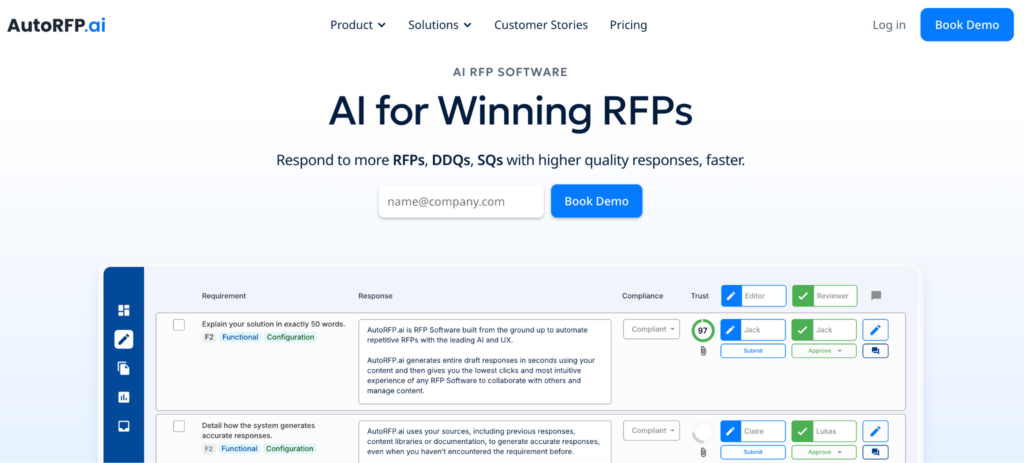
AutoRFP.ai focuses heavily on reducing repetitive drafting work and improving response throughput across questionnaire-heavy environments.
Capabilities include:
- AI-generated response drafting
- Workflow automation
- Knowledge reuse systems
- Collaboration workflows
- Security questionnaire support
- Proposal acceleration tools
The platform is frequently evaluated by organizations trying to improve operational scalability without significantly increasing internal proposal and compliance headcount.
Its AI-first workflow model appeals particularly well to teams managing growing assessment workloads under tight operational constraints.
Vendor assessments are evolving into operational ecosystems
One of the biggest misconceptions about vendor reviews is that they are still isolated procurement tasks.
In reality, they increasingly behave like operational ecosystems involving multiple departments, systems, governance layers, and approval environments simultaneously.
That complexity is exactly why response platforms are evolving so quickly right now.
The strongest systems increasingly focus on:
- Workflow orchestration
- Governance visibility
- Connected knowledge
- AI-assisted coordination
- Auditability
- Cross-functional collaboration
Sequesto stands out especially well in this environment because the platform approaches vendor assessments as structured operational workflows rather than disconnected document tasks.
For many enterprise organizations, managing assessments effectively is no longer only about responding faster. It is about maintaining operational control as commercial complexity keeps expanding.