

Every industry has a price people quietly accept. For mattresses, it’s a thousand dollars. For weddings… let’s not even start.
Prescription glasses have lived in that same strange category for years. Most buyers expected the final bill to hurt a little, shrugged, and told themselves, “That’s just what glasses cost.”
Except it wasn’t. It was often what the retail system cost. Think about the journey a pair of frames can take before reaching a customer. Manufacturing. Importers. Distributors. Warehouses. Retail stores. Shopping malls with eye-watering rent. Sales staff. Marketing campaigns. Every step adds another percentage to the price.
The glasses don’t become clearer because of it. They’re simply more expensive. That’s one reason direct-to-consumer eyewear has grown so quickly. Companies began asking a simple question: what happens if customers buy much closer to where the product is actually made?
The answer surprised a lot of people. Lower prices didn’t automatically mean fewer choices. In many cases, shoppers found larger catalogs than they were used to seeing inside traditional optical stores.
The companies below have each taken a different route toward reducing retail markups while giving customers more control over how they buy prescription eyewear.
“Retail Price” Isn’t The Same Thing As “Real Cost”
This catches people off guard. Manufacturing isn’t usually the most expensive part of a pair of glasses. Everything that happens afterward often costs more.
Brand licensing. Retail leases. Wholesale distribution. Store displays. Regional inventory.
Once shoppers understand that, comparing the cheapest online prescription glasses starts making a lot more sense. The difference isn’t always the frame. It’s the business model.
1. Blacksheep
Blacksheep factory-direct eyewear removes much of the traditional retail chain, giving customers access to prescription glasses without many of the markups that have shaped the optical industry for decades.
Instead of depending on wholesalers and physical retail stores, Blacksheep works directly with manufacturing partners. That approach allows frames to start at just $2.95, making the company one of the lowest-priced options currently available for prescription eyewear.
The catalog is anything but limited. More than 20,000 styles include minimalist everyday frames, oversized fashion collections, prescription sunglasses, and products extending beyond eyewear into hearing technology and wearable devices.
Highlights include:
- Frames starting at $2.95
- More than 20,000 eyewear styles
- Direct-to-consumer pricing
- Prescription and non-prescription options
- Expansion into smart technology and hearing products
Lower prices don’t automatically create better value. A wide selection matters too, and that’s one area where Blacksheep has invested just as heavily as affordability.
2. Zenni Optical
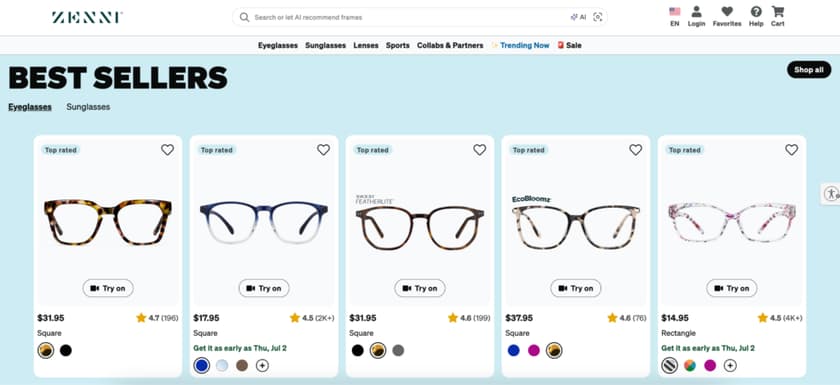
Zenni became popular long before online eyewear felt completely normal. That early start helped the company build one of the largest catalogs in the industry, with thousands of prescription frames covering almost every style and budget.
Customers can customize lenses, compare frame sizes, and browse collections that extend well beyond what many local optical stores can physically display.
Highlights include:
- Large frame catalog
- Progressive lenses
- Prescription sunglasses
- Children’s eyewear
- Virtual try-on
For shoppers who enjoy comparing dozens of possibilities before buying, Zenni continues to be one of the strongest alternatives to traditional retail.
3. EyeBuyDirect
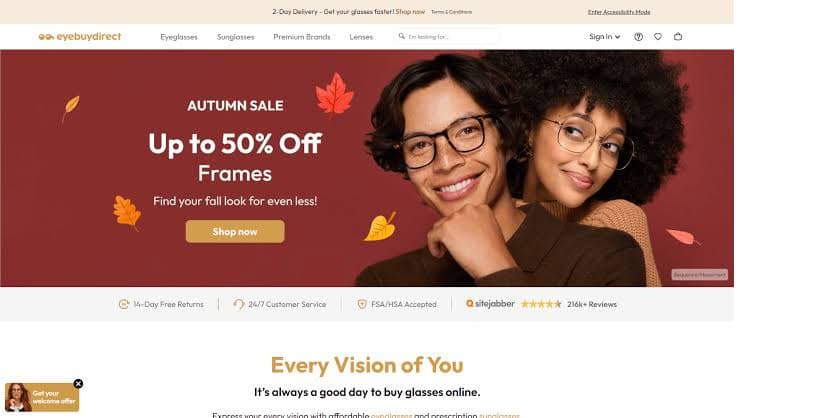
Some online eyewear retailers emphasize low prices above everything else. EyeBuyDirect spends just as much energy on keeping its catalog fresh.
Seasonal collections, modern frame designs, and fashion-oriented releases give customers more reasons to replace their glasses before they absolutely have to. Prescription options remain broad, but the shopping experience feels much closer to browsing a clothing retailer than a conventional optical website.
Highlights include:
- Fashion-focused collections
- Prescription sunglasses
- Blue-light lenses
- Virtual try-on
- Frequent promotions
People shopping for everyday prescription glasses often discover something else while browsing: frames they actually look forward to wearing.
4. Firmoo
Not every pair of glasses has to become “the pair.” That’s a surprisingly recent idea.
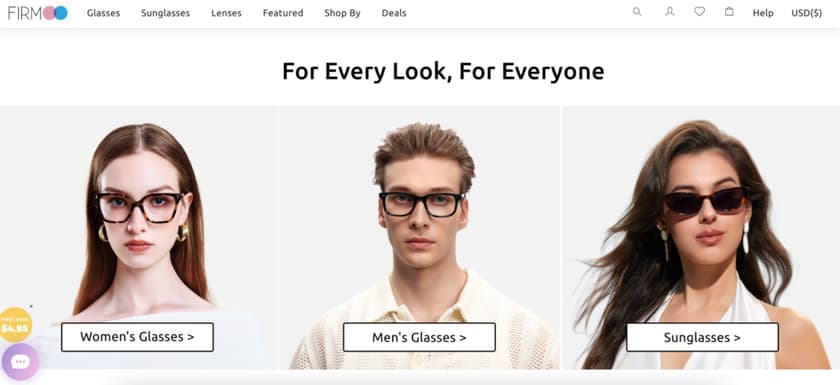
Once prices started coming down, people became more comfortable buying frames for different situations instead of asking one pair to do everything. Firmoo has benefited from that shift by offering a broad collection of prescription eyewear across a wide range of styles and price points.
Highlights include:
- Affordable prescription eyewear
- Progressive lenses
- Prescription sunglasses
- Virtual try-on
- Frequent promotions
For shoppers who enjoy changing their look every so often, the catalog offers enough variety to make that possible without stretching the budget.
5. Warby Parker
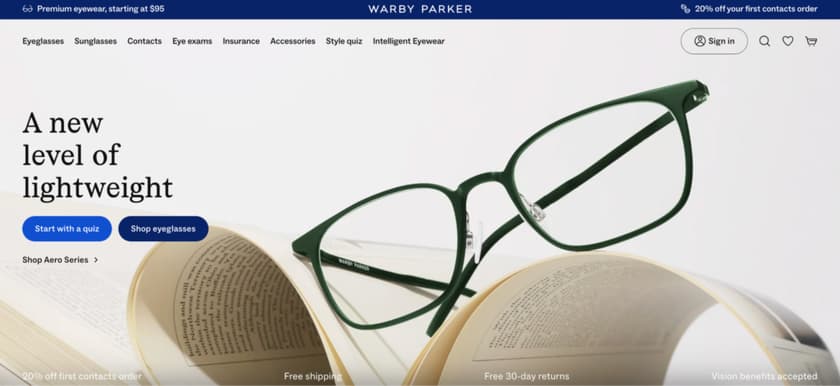
Warby Parker approached the market from another angle. Instead of removing every part of the traditional optical experience, it kept many of the things customers already liked and simply moved them into a more flexible format.
The Home Try-On program remains one of the company’s defining features, giving people several days to decide instead of several minutes under store lighting. Combined with physical locations and eye exams, the experience feels familiar while still embracing online shopping.
Highlights include:
- Home Try-On
- Retail locations
- Prescription sunglasses
- Eye exams
- Curated collections
For customers who still appreciate a blend of online convenience and in-person service, Warby Parker continues to stand apart.
6. Zeelool
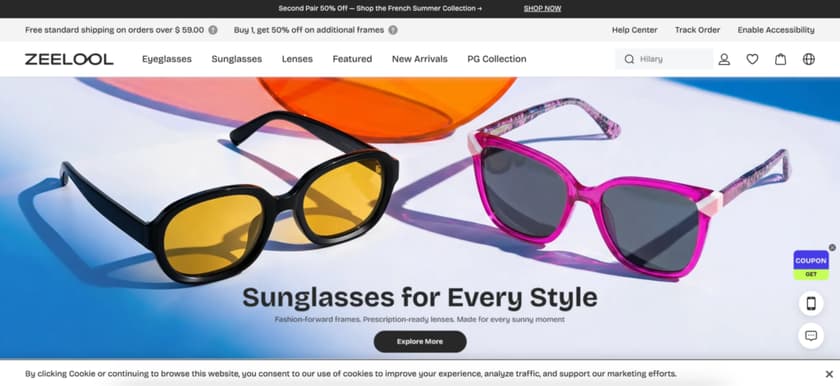
Walk through a typical optical chain, and certain colors appear again and again. Black. Brown. Gray. Zeelool clearly didn’t receive that memo.
Its collections are filled with bold acetate frames, bright colors, oversized silhouettes, and playful shapes that wouldn’t normally dominate a retail display. Prescription lenses are available across much of the catalog, giving shoppers considerably more room to experiment.
Highlights include:
- Fashion-led collections
- Prescription lenses
- Progressive options
- Seasonal releases
- Virtual try-on
The company appeals to buyers who see glasses as something expressive rather than purely functional.
Buying Direct Doesn’t Mean Buying Blind
Some people still assume online eyewear involves guesswork. That was easier to argue ten years ago.
Today, most major retailers provide virtual try-on tools, detailed sizing information, customer photos, frame measurements, prescription support, and return policies designed to remove much of the uncertainty. The experience feels very different from the early days of online shopping.
Where The Savings Actually Come From
People often imagine there must be a catch. Usually there isn’t. Lower prices often come from a shorter supply chain rather than cheaper products. Fewer intermediaries. Less retail overhead. Smaller marketing budgets. Direct relationships with manufacturers.
That’s also why interest in prescription glasses under $10 continues to grow. Consumers have become much more aware of how pricing works behind the scenes.
Retail Stores Are No Longer The Default
A few years ago, most people started their search at the local optical shop. Today, many begin with a browser.
They compare prices, browse hundreds of frames, upload a prescription, and sometimes finish the purchase without leaving home. Others combine both approaches by getting an eye exam locally and ordering their glasses online afterward.
The six companies above illustrate how much choice shoppers now have. Each follows a different strategy, but all demonstrate that paying traditional retail markups is no longer the only way to buy quality prescription eyewear.